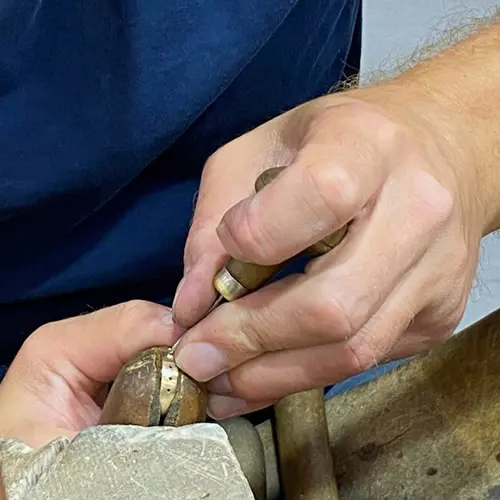
Over time, even the most carefully worn jewelry picks up scratches, scuffs, and small dents. Rings take the most abuse, but bracelets, watches, and pendants show wear too. Professional jewelry polishing can restore a bright, like-new finish. Done carelessly, though, polishing removes metal and can wear away details. Done right, it's a safe and satisfying way to refresh your jewelry.
This guide explains how professional jewelry polishing works, how it differs from cleaning, when to polish, and what to watch out for.
Cleaning vs. Polishing
These are often confused, but they're different:
- Cleaning removes dirt, oils, and buildup. It doesn't change the metal.
- Polishing removes a microscopic layer of metal to smooth out scratches and restore shine.
Cleaning can be done often. Polishing should be done when needed, because it removes metal.
How Professional Jewelry Polishing Works
1. Inspection
The jeweler checks the piece for loose stones, worn prongs, thin areas, and any repairs needed. Repairs are done before polishing.
2. Pre-polish (cutting)
Coarser compounds on rotating buffs remove deeper scratches.
3. Fine polish
Finer compounds bring up a mirror finish.
4. Detail work
Small brushes and buffs reach inside galleries, around prongs, and into details.
5. Cleaning
Polishing compound residue is removed, often with ultrasonic or steam cleaning where safe.
6. Rhodium plating (white gold)
White gold is often replated after polishing for a uniform bright white finish. See rhodium plating.
Finishes Beyond High Polish
- Satin or brushed - a soft, matte look created with abrasive wheels or pads.
- Sandblasted - a uniformly frosted finish.
- Hammered - a textured finish created with hammers.
- Florentine - fine crosshatched engraving texture.
Matte and textured finishes hide fine scratches well. They can be refreshed by refinishing.
When Should Jewelry Be Polished?
- When scratches make it look dull
- After resizing or repairs, to blend seams
- Before a special event
- When white gold needs replating
- When a watch bracelet looks worn
There's no need to polish on a fixed schedule. Many people polish rings every year or two, depending on wear.
The Risk of Over-Polishing
Because polishing removes metal, polishing too often or too aggressively can:
- Thin ring shanks
- Wear down prongs
- Soften crisp edges and engraving
- Erase hallmarks and maker's marks
- Reduce the value of vintage pieces and collectible watches
A skilled jeweler polishes conservatively, removing only what's necessary.
Polishing Watches
Watch cases and bracelets can be polished, but some watches combine polished and brushed surfaces with sharp edges. Over-polishing can soften these edges and affect value, especially on collectible watches. Some collectors prefer light refinishing or none at all. We'll talk through your goals first.
Polishing Vintage and Antique Jewelry
Antique pieces often have patina, fine engraving, and hand-finished details that contribute to their character and value. We'll recommend gentle cleaning or light polishing that preserves what makes the piece special.
Polishing Platinum
Platinum doesn't lose metal to scratches the same way gold does. Instead, metal is displaced, creating a soft patina. Polishing restores a bright shine. Some people prefer platinum's natural patina.
Polishing Silver
Silver tarnishes and scratches. Professional polishing removes tarnish and scratches together. Pieces with intentionally oxidized (darkened) details need care so they aren't polished away.
Pieces That Need Special Care
- Pearls and soft gems - must be protected or removed during polishing.
- Plated jewelry - polishing can remove plating.
- Hollow jewelry - thin walls can be damaged by aggressive polishing.
- Engraved pieces - engraving can be softened.
DIY Polishing
Polishing cloths are fine for light touch-ups on gold and silver. Avoid toothpaste, baking soda, and abrasive household products, which scratch metal. Rotary tools at home can easily damage jewelry.
Jewelry Polishing in Mesa
Brilliant Jewelry is a fourth-generation, family-owned jeweler at 1237 S Val Vista Dr Ste 204, Mesa, AZ 85204. We polish and refinish jewelry in-house, conservatively and carefully, as part of our jewelry repair services.
Book a jewelry polishing appointment or call or text (480) 331-8652.