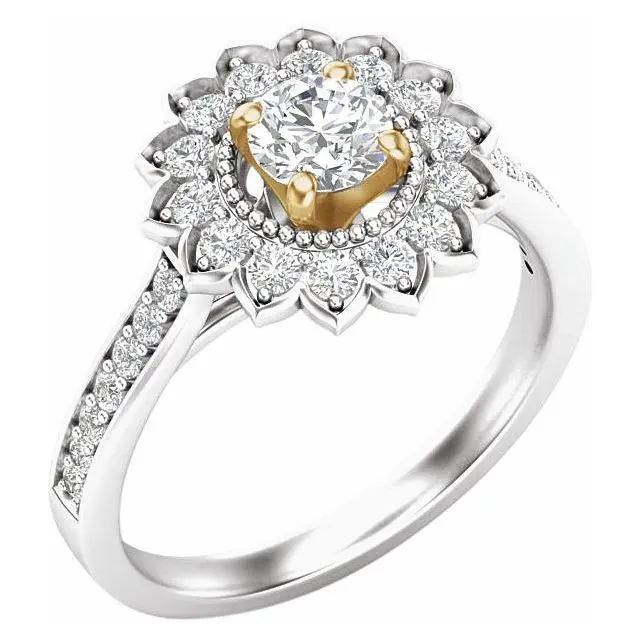
The setting is the part of a ring or other piece that holds the diamond in place. It affects how the diamond looks, how much light it catches, how secure it is, and how easy the piece is to wear and maintain. Choosing the right diamond setting is just as important as choosing the diamond.
This guide explains the most common diamond setting types, their pros and cons, and how to choose the right one for your lifestyle.
Prong Setting
Prong settings use small metal claws to hold the diamond. They're the most popular setting for engagement rings.
Variations
- Four prongs - shows more of the diamond; gives round stones a slightly square look from above.
- Six prongs - more secure and keeps a round diamond looking round. If one prong is damaged, five still hold the stone.
- Claw prongs - pointed tips for a delicate look.
- Round prongs - rounded tips, classic and comfortable.
- V-prongs - protect the points of pear, marquise, princess, and heart shapes.
- Double prongs - two prongs at each position for extra security.
Pros
Maximizes light and visibility. Classic. Easy to clean.
Cons
Prongs wear over time and can snag. Higher settings are more exposed.
Maintenance
Have prongs checked periodically. Worn prongs can be re-tipped. See our prong repair guide.
Bezel Setting
A bezel surrounds the diamond with a thin rim of metal.
Variations
- Full bezel - metal all the way around.
- Partial bezel - metal on two sides, leaving the sides open.
Pros
Very secure. Protects the girdle from chips. Snag-resistant. Modern, sleek look.
Cons
Covers a little more of the diamond. Can make the stone look slightly smaller.
Best for
Active lifestyles, healthcare workers, and anyone hard on jewelry.
Halo Setting
A halo surrounds the center stone with a ring of small diamonds.
Pros
Adds sparkle and makes the center stone look larger. Can protect the center stone's edges.
Cons
Small halo diamonds can loosen with impact and need periodic checks.
Variations
- Hidden halo - a ring of diamonds under the center stone, visible from the side.
- Double halo - two rings of small diamonds.
Pave Setting
Pave ("paved") settings cover a surface with many small diamonds held by tiny beads of metal.
Pros
Lots of sparkle. Beautiful on bands and halos.
Cons
Tiny beads can wear, and small stones can loosen. Harder to resize.
Variations
- Micro pave - very small stones set very closely.
- French pave - V-shaped cuts that show more of each stone.
Channel Setting
Diamonds sit between two parallel walls of metal.
Pros
Secure and smooth. Snag-resistant. Popular in wedding bands.
Cons
Repairs can be more involved if a channel wall bends.
Bar Setting
Diamonds are held between vertical bars, leaving the sides open.
Pros
Modern look, more light than channel settings.
Cons
Slightly less protective than channel.
Flush (Gypsy) Setting
The diamond is set into a hole drilled in the metal, sitting level with the surface.
Pros
Very secure and snag-free. Popular in men's rings.
Cons
Shows less of the diamond.
Tension Setting
The diamond is held by the pressure of the metal band, appearing to float.
Pros
Dramatic, modern look.
Cons
Very difficult to resize. Requires precise engineering. Some designs are vulnerable to impact.
Cathedral Setting
Arches of metal rise from the band to hold the center stone, like a cathedral's arches.
Pros
Elegant, adds height and presence.
Cons
Higher profile can snag.
Cluster Setting
Multiple small diamonds grouped to look like one larger stone or a floral design.
Pros
Large look at a lower cost than a single large stone.
Cons
Many small stones to maintain.
Three-Stone Setting
A center diamond flanked by two side stones.
Pros
Symbolic and balanced. Makes the center look prominent.
Cons
More prongs to maintain.
How to Choose the Right Setting
Consider:
- Lifestyle - active? Choose bezel, channel, flush, or low prongs.
- Diamond shape - pointed shapes need protective prongs or bezels.
- Style - classic, modern, vintage?
- Maintenance - pave and halo need more checks.
- Wedding band fit - some settings need a contoured band.
- Resizing - tension and eternity designs are hard to resize.
Setting a Loose Diamond You Already Own
If you have a loose diamond or an inherited stone, we can design a setting around it. See ring settings for loose stones and our custom jewelry design.
Diamond Settings in Mesa
Brilliant Jewelry is a fourth-generation, family-owned private jeweler at 1237 S Val Vista Dr Ste 204, Mesa, AZ 85204. We design settings, reset stones, and repair prongs and pave in-house. Read our engagement ring buying guide.
Book a free setting consultation or call or text (480) 331-8652.