Maybe you inherited a diamond from a grandparent. Maybe you bought a loose stone and want to design the ring around it. Maybe an old ring broke and the stone is sitting in a drawer. Whatever the story, a loose stone deserves a setting that shows it off and keeps it secure.
This guide walks through how to choose a ring setting for a loose stone, what a jeweler needs to know about your stone, and what to expect from the process.
Step 1: Have the Stone Evaluated
Before choosing a setting, a jeweler should examine your stone. This includes:
- Identification - confirming whether it's a diamond, a lab grown diamond, a colored gemstone, or a simulant.
- Measurements - length, width, and depth in millimeters. Settings must be sized to the exact stone.
- Shape - round, oval, princess, pear, emerald, cushion, and so on.
- Condition - chips, cracks, or abrasions that might affect setting choices.
- Hardness - softer gems need more protective settings.
Older stones, especially antique cuts, sometimes have chips or wear. In some cases, repolishing is an option. We'll explain what we find.
Step 2: Decide How You'll Wear It
- Engagement ring - worn daily; durability is key.
- Right-hand ring - often worn daily, sometimes less.
- Cocktail ring - occasional wear; bolder designs possible.
- Pendant or earrings - another option if a ring isn't the right fit.
Step 3: Choose a Setting Style
Solitaire
A single stone on a simple band, usually held by four or six prongs. Classic and lets the stone shine.
Halo
Small diamonds surround your stone. Adds sparkle and apparent size, and can make a modest stone look larger.
Hidden halo
A ring of small diamonds under the stone, visible from the side.
Three-stone
Your stone in the center with two side stones. A great way to add presence to a smaller center.
Bezel
Metal surrounds the stone. Very secure and protective, ideal for softer gems or active wearers.
Vintage-inspired
Milgrain, engraving, and filigree pair beautifully with antique cut diamonds.
Cathedral
Arches rise to hold the stone, adding height and elegance.
Pave band
Small diamonds along the band add sparkle.
Toi et moi
Your stone paired with a second stone, perhaps a family birthstone.
Step 4: Choose Prongs or Protection
- Four prongs - show more of the stone.
- Six prongs - more secure for round stones.
- V-prongs - protect points on pear, marquise, princess, and heart shapes.
- Double prongs - extra security.
- Bezel - maximum protection.
Step 5: Choose a Metal
- Platinum - durable, naturally white, secure prongs.
- White gold - bright when plated.
- Yellow gold - warm; can make a slightly tinted diamond look whiter.
- Rose gold - flattering with warmer stones and pink gems.
Matching the Setting to Your Stone
Old mine and old European cut diamonds
These antique cuts have a soft, romantic sparkle and often a high crown and small table. Vintage-style settings complement them well. Settings need to account for their often deeper proportions.
Colored gemstones
Sapphires and rubies are durable and work in most settings. Emeralds, morganite, opals, and tanzanite need more protective settings like bezels or halos.
Fancy shapes
Pear, marquise, and princess shapes need protected points. Emerald and Asscher cuts look elegant in clean, geometric settings.
Small stones
A halo, three-stone, or cluster design can enhance a smaller stone's presence.
Should You Buy a Pre-Made Setting or Go Custom?
Pre-made semi-mounts (settings designed to hold a center stone) can work if your stone is a standard shape and size. Custom settings are designed exactly for your stone and style, which is especially helpful for antique cuts, unusual shapes, and sentimental pieces. Learn about custom jewelry design.
What to Expect During Setting
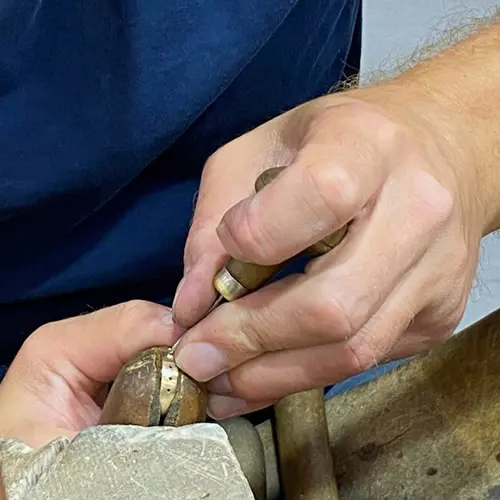
The stone is carefully set into the mounting, prongs or bezels are shaped around it, and the ring is finished and polished. Heat-sensitive stones are set after any soldering is complete.
Using Other Family Materials
You may also be able to use other inherited stones as side stones or accents. Old gold can sometimes be reused, though it's often more practical to apply its value toward new metal. See sell jewelry.
After Setting: Protect It
- Get an appraisal and insure it.
- Have prongs checked periodically.
- Clean regularly.
Set Your Loose Stone in Mesa
Brilliant Jewelry is a fourth-generation, family-owned private jeweler at 1237 S Val Vista Dr Ste 204, Mesa, AZ 85204. Bring in your loose diamond or gem, and we'll help you design a setting that honors it. Read our engagement ring buying guide.
Book a free setting consultation or call or text (480) 331-8652.