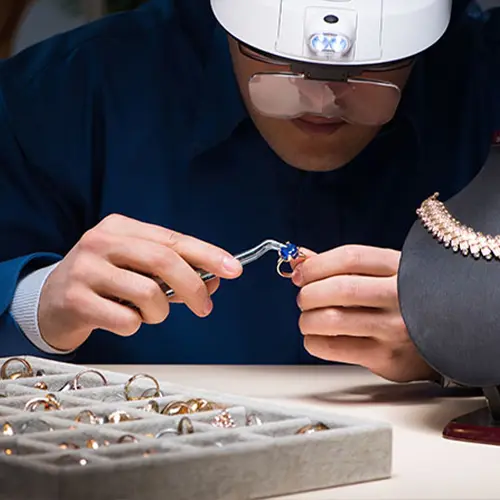
If you own jewelry that would be expensive or emotionally difficult to replace, you need to know what it's worth and you need documentation to prove it. That's what a jewelry appraisal provides. An appraisal is a written, professional evaluation of a piece's characteristics and value for a specific purpose, most often insurance.
This guide explains the types of jewelry appraisals, what a good appraisal includes, how the process works, and when to update one.
What Is a Jewelry Appraisal?
A jewelry appraisal is a detailed document that describes a piece of jewelry and assigns a value based on its intended use. It typically includes:
- A detailed description of the item
- Metal type and karat or fineness
- Weight
- Measurements
- Gemstone identification and grading
- Photographs
- The value and the type of value (for example, replacement value)
- The appraiser's details and the date
An appraisal is different from a sales receipt or a grading report. A receipt shows what you paid. A diamond grading report describes a stone but doesn't usually assign value. An appraisal ties everything together and assigns value for a purpose.
Types of Jewelry Appraisals
Insurance replacement appraisal
The most common type. It estimates what it would cost to replace the item with one of like kind and quality at current retail. Insurers often require one to schedule jewelry on a policy.
Estate appraisal
Used when settling an estate, dividing property among heirs, or for tax purposes. It typically reflects fair market value, which is usually different from insurance replacement value.
Fair market value appraisal
Estimates what a willing buyer would pay a willing seller. Used for estate, donation, and some legal purposes.
Liquidation or resale value
What you could realistically expect to get if you sold the piece quickly. If you're thinking of selling, we can also make a fair offer on your jewelry.
Why You Need a Jewelry Appraisal
- To insure your jewelry properly. Without documentation, you may be underinsured or unable to file a claim.
- To replace lost or stolen pieces. Detailed descriptions help insurers replace items with like kind and quality.
- For estate planning. Appraisals help divide heirlooms fairly.
- For peace of mind. Knowing what you own is valuable in itself.
What Jewelry Should Be Appraised?
- Engagement rings and wedding bands
- Diamond earrings, pendants, and tennis bracelets
- Fine watches
- Inherited and estate jewelry
- Colored gemstone jewelry
- Any piece you'd want to replace if lost
How the Jewelry Appraisal Process Works
1. Schedule an appointment
Appraisals take time and attention. At Brilliant Jewelry, we work by appointment so your pieces get our full focus.
2. Examination
We clean and examine each piece, identify the metal, measure and weigh it, and examine gemstones under magnification. Diamonds are graded for color, clarity, and cut characteristics as mounted.
3. Research and valuation
The value is determined based on the type of appraisal and current market information.
4. Written report
You receive a written appraisal document with descriptions, photos, and values.
How Long Does an Appraisal Take?
It depends on the number and complexity of pieces. A single ring takes less time than a large estate collection. We'll give you a timeline when you book.
How Often Should Jewelry Be Re-Appraised?
Metal and gemstone markets change. Many insurers and appraisers suggest updating appraisals every few years, or after significant market changes, to keep coverage accurate. Check your insurer's requirements.
Preparing for an Appraisal
- Bring any receipts, grading reports, or prior appraisals.
- Bring the jewelry clean if possible (we'll clean it too).
- Let us know the purpose of the appraisal: insurance, estate, or other.
- Mention any history you know, like an inherited ring's age or origin.
Appraisal vs. Jewelry Inspection
An appraisal is a formal document. An inspection is a check of condition: prongs, clasps, and settings. We often find small issues, like a worn prong, during the appraisal examination. We'll tell you about anything that needs attention so you can protect your jewelry before it's damaged or lost.
Can an Appraisal Tell If Jewelry Is Real?
Yes, part of the appraisal process is identifying materials: whether gold is solid or plated, whether a stone is a diamond, a simulant, or another gem. For determining whether a diamond is natural or lab grown, advanced laboratory testing may be required, and we'll tell you if we recommend it.
Jewelry Appraisals in Mesa
Brilliant Jewelry is a fourth-generation, family-owned jeweler and Jewelers of America member at 1237 S Val Vista Dr Ste 204, Mesa, AZ 85204. We provide detailed insurance and estate appraisals by appointment for clients across the East Valley.
Book a jewelry appraisal or call or text (480) 331-8652.