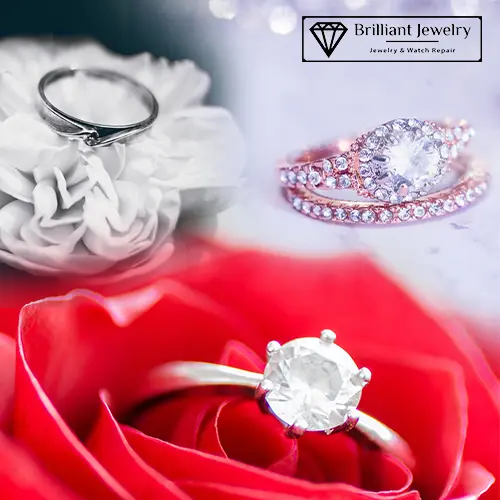
Diamond jewelry is often bought to mark something: an engagement, an anniversary, a graduation, a promotion. Because it's meant to last for decades, it's worth buying carefully and caring for properly.
This guide covers the main types of diamond jewelry, how to judge quality beyond the price tag, what to look for in settings and metals, and how to keep your diamonds secure and sparkling for years.
Types of Diamond Jewelry
Diamond stud earrings
Studs are the most versatile diamond piece you can own. Look for well-matched stones (similar size, color, and brightness) and secure backs. Screw backs offer more security than standard friction backs for valuable studs.
Diamond pendants and necklaces
A solitaire pendant, a halo pendant, or a diamond bar necklace can be worn every day. Pay attention to the bail (the loop connecting the pendant to the chain) and the chain itself. A delicate chain holding a heavy pendant is a common cause of lost jewelry.
Tennis bracelets
A tennis bracelet is a line of individually set diamonds. They're beautiful but take a lot of wear. A box clasp with a safety latch, or a double safety, is important. Tennis bracelets should be checked periodically for loose stones and worn links.
Diamond rings
Beyond engagement rings and wedding bands, diamond rings include anniversary bands, eternity bands, cocktail rings, and right-hand rings. See our engagement ring buying guide for ring-specific advice.
Men's diamond jewelry
Men's diamond rings, studs, and chains are increasingly popular. Durability and secure settings matter even more for pieces worn during work and sports. Browse men's jewelry.
Judging Diamond Quality
Diamonds are graded on the 4Cs: cut, color, clarity, and carat weight.
- Cut controls how light returns to your eye. A well-cut diamond looks brighter and often larger than a poorly cut stone of the same weight.
- Color grades describe how colorless a white diamond is. Once set, especially in yellow gold, neighboring color grades can be hard to tell apart.
- Clarity describes internal and surface characteristics. For most jewelry, eye-clean is what matters.
- Carat is weight. Bigger is not always better if cut quality suffers.
For small diamonds, like pave or accent stones, grading is usually given as a range for the whole piece rather than per stone. For larger center stones, ask whether there's a grading report from a recognized lab.
Natural vs. Lab Grown Diamonds
Both are real diamonds. Lab grown diamonds are created in a controlled environment and typically cost less for the same size and quality. Natural diamonds formed in the earth and generally hold value better over time. Neither is the wrong choice. It depends on your priorities: size and budget, or origin and long-term value.
Metals for Diamond Jewelry
- Platinum - dense, durable, naturally white, and secure for holding diamonds.
- White gold - bright when rhodium plated; needs periodic replating.
- Yellow gold - warm and classic; can make slightly tinted diamonds look whiter by comparison.
- Rose gold - soft pink tone that pairs well with both white and warmer diamonds.
Settings: Where Security Lives
The setting is what keeps your diamond attached to you. Common settings include:
- Prong - shows the most of the diamond. Prongs wear over time and need checks.
- Bezel - metal surrounds the stone. Very secure and protective.
- Pave - many small diamonds held by tiny beads of metal. Beautiful, but small stones can loosen with impact.
- Channel - diamonds set between two walls of metal. Common in bands.
A quick tip: gently tap the piece near your ear. A rattle or click can mean a loose stone. Bring it to a jeweler before wearing it again.
What to Ask When Buying Diamond Jewelry
- What are the diamond grades, and is there a grading report?
- Is the diamond natural or lab grown?
- What metal and karat is the piece?
- How are the stones set, and how often should the setting be checked?
- Can the piece be resized or repaired later?
- Is there an appraisal for insurance?
Caring for Diamond Jewelry
Daily habits
- Put diamond jewelry on after lotion, perfume, and hairspray.
- Remove rings for the gym, gardening, cleaning, and swimming.
- Store pieces separately. Diamonds can scratch other diamonds and other jewelry.
Cleaning at home
Soak in warm water with a few drops of mild dish soap, then gently brush with a soft toothbrush, especially under the stone where oils and lotion collect. Rinse and pat dry. Our jewelry care tips go into more detail.
Professional cleaning and inspection
A professional cleaning removes buildup home cleaning can't reach. More importantly, it's a chance for a jeweler to check prongs, settings, and clasps under magnification before a problem becomes a lost stone.
Protecting Your Investment
Get an appraisal
Insurers typically require a written appraisal for valuable jewelry. An appraisal documents the diamonds, metal, and replacement value. Brilliant Jewelry provides insurance and estate appraisals.
Insure it
Homeowner's or renter's policies may have limited jewelry coverage. Ask your insurer about scheduling valuable pieces.
Keep records
Keep receipts, grading reports, appraisals, and photos together in a safe place.
Repairing Diamond Jewelry
Common diamond jewelry repairs include re-tipping worn prongs, tightening loose stones, replacing lost accent diamonds, repairing tennis bracelet links and clasps, and resizing rings. All of these are done in-house at Brilliant Jewelry.
Redesigning Diamond Jewelry
If you've inherited diamond jewelry that doesn't fit your style, the diamonds can often be reset into something new. A custom redesign lets you keep the sentimental value while wearing a piece you love.
Diamond Jewelry From a Family Jeweler in Mesa
Whether you're buying a first pair of studs, resetting an heirloom, or repairing a tennis bracelet, Brilliant Jewelry can help. We're a fourth-generation, family-owned private jeweler at 1237 S Val Vista Dr Ste 204 in Mesa, serving the East Valley with honest guidance and in-house work.
Book a free diamond jewelry consultation or call or text (480) 331-8652.