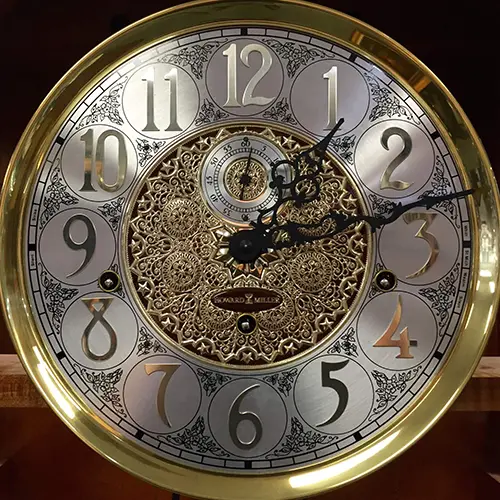
The crystal is the clear cover that protects your watch dial and hands. It takes every bump against a door frame, desk, or countertop. When it scratches, chips, or cracks, it's not just cosmetic. A damaged crystal can let in dust and moisture that harm the movement.
This guide explains the types of watch crystals, when a crystal can be polished instead of replaced, what affects replacement cost, and how to protect your watch afterward.
Types of Watch Crystals
Acrylic (plastic)
Common on vintage watches and some modern pieces.
- Pros: Inexpensive, shatter-resistant, and light scratches can often be polished out.
- Cons: Scratches easily.
Mineral glass
Common on many mid-range watches.
- Pros: More scratch-resistant than acrylic, affordable.
- Cons: Scratches can't be polished out easily; can shatter on hard impact.
Sapphire crystal
Common on higher-end watches.
- Pros: Very scratch-resistant, clear, and durable.
- Cons: Can chip or crack on hard impact, especially at the edges. Generally more expensive to replace.
Coated and specialty crystals
Some crystals have anti-reflective coatings, magnifiers (cyclops) over the date, or domed shapes. Replacement must match these features.
Signs Your Watch Crystal Needs Attention
- Deep scratches that obscure the dial
- Chips on the edge
- Cracks of any kind
- Fog or moisture under the crystal
- A crystal that's loose or shifted
- Missing date magnifier
A cracked crystal should be addressed promptly to prevent dust and moisture from entering the movement.
Polishing vs. Replacing
When polishing works
Acrylic crystals with light to moderate scratches can often be polished to near-new clarity.
When replacement is needed
- Mineral and sapphire crystals with deep scratches
- Any cracked or chipped crystal
- Crystals that have lost their seal
- Acrylic crystals with cracks or very deep scratches
The Watch Crystal Replacement Process
- Evaluation - identifying crystal type, size, and how it's mounted.
- Sourcing - finding a crystal that matches the diameter, thickness, shape, and features.
- Removal - removing the old crystal carefully to avoid damaging the dial or hands.
- Cleaning - removing glass fragments and debris from the dial and case.
- Installation - pressing or gluing the new crystal into place with the correct gasket or tension ring.
- Testing - checking the fit and, where applicable, water resistance.
What Affects Watch Crystal Replacement Cost
- Crystal material - sapphire generally costs more than mineral or acrylic.
- Shape and size - domed, square, or unusual shapes can be harder to source.
- Special features - anti-reflective coatings, date magnifiers.
- Brand - some brands require specific parts.
- Mounting method - pressed, glued, or held with a gasket or bezel.
- Additional damage - debris in the movement may require cleaning.
- Water resistance testing
We'll evaluate your watch and quote before work begins.
Upgrading to Sapphire
Some watches can be upgraded from mineral to sapphire crystal for better scratch resistance. Whether this is possible depends on the watch. Ask during your evaluation.
Vintage Watch Crystals
Vintage watches often use acrylic crystals in specific shapes. Replacements are available for many vintage models, though some require sourcing. We evaluate vintage pieces case by case.
Water Resistance After Crystal Replacement
Crystal replacement involves the watch's seal. If you need your watch to stay water resistant, ask about gasket replacement and testing after installation.
Preventing Crystal Damage
- Be mindful of door frames, counters, and car doors.
- Remove your watch for heavy work and sports.
- Store watches so crystals don't touch other hard objects.
- Avoid sudden temperature changes, which can stress crystals and seals.
Watch Crystal Replacement in Mesa
Brilliant Jewelry is a fourth-generation, family-owned jeweler at 1237 S Val Vista Dr Ste 204, Mesa, AZ 85204. We replace and polish watch crystals as part of our in-house watch repair services.
Book a watch crystal evaluation or call or text (480) 331-8652.