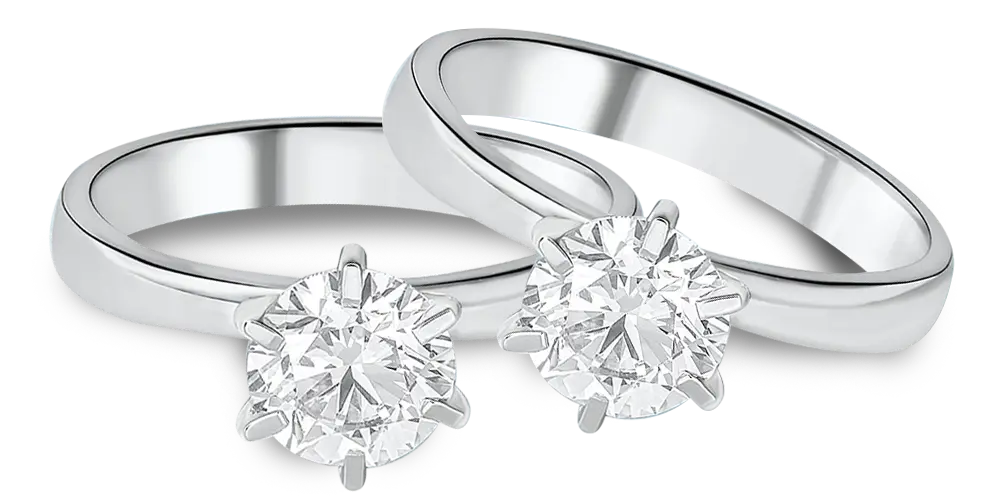
Of all the jewelry you'll own, your wedding band is likely to be the piece you wear the most. It goes to work with you, to the gym (ideally not), to the grocery store, and on vacation. It's on your hand through decades of life. Choosing one isn't just about how it looks in the case. It's about how it will feel and wear for years.
This guide covers the decisions that matter: metal, width, profile, finish, stones, fit, and how to pair a band with an engagement ring.
Start With How You'll Wear It
Before falling for a style, think about your daily life:
- Do you work with your hands, lift weights, or play sports?
- Do you wear gloves often?
- Are you hard on jewelry?
- Will you take the ring off often, or never?
Someone who works in construction may want a solid, plain band in a durable metal. Someone who works at a desk has more freedom to choose delicate designs and pave diamonds.
Wedding Band Metals
Platinum
Platinum is naturally white, dense, and hypoallergenic for most people. It doesn't need rhodium plating. Over time it develops a soft, satin-like patina that some people love and others prefer to have polished.
White gold
White gold is gold alloyed with white metals and typically plated with rhodium for a bright white finish. The plating wears over time, so plan on periodic replating. Read about rhodium plating.
Yellow gold
Classic and warm, yellow gold is easy to size and repair. 14k is harder and more scratch-resistant. 18k has a richer color and higher gold content.
Rose gold
Rose gold gets its color from copper. It's durable and flattering on many skin tones.
Alternative metals
Tungsten, titanium, cobalt, and other alternative metals are popular for men's bands because they're scratch-resistant and affordable. The tradeoff: many can't be resized, and some can't be cut off easily in an emergency. Ask about this before you buy.
Width and Profile
Width
Wedding bands are measured in millimeters. Narrow bands (around 2mm) look delicate and pair well with engagement rings. Wider bands (6mm and up) make a bolder statement and are common in men's styles. Wider bands also fit snugger, so you may need a slightly larger size.
Profile
The profile is the shape of the band in cross-section:
- Flat - modern and clean.
- Domed or half-round - classic and comfortable.
- Knife-edge - comes to a subtle peak, catches light nicely.
- Beveled edges - a flat top with angled edges.
Comfort fit vs. standard fit
Comfort-fit bands are rounded on the inside so they slide over the knuckle more easily. They can feel a little looser than standard-fit bands of the same size. Many people, especially with wider bands, prefer comfort fit.
Finishes
- High polish - shiny and reflective. Shows scratches more but can be repolished.
- Satin or brushed - soft, matte look that hides fine scratches.
- Hammered - textured, organic, and forgiving.
- Milgrain - tiny beaded edges for a vintage feel.
Wedding Bands With Diamonds
Diamond wedding bands range from a few accent stones to full eternity bands.
- Half eternity - diamonds across the top only. Easier to resize and more comfortable for everyday wear.
- Full eternity - diamonds all the way around. Dazzling, but difficult or impossible to resize.
- Channel set - stones protected between metal walls, good for active wearers.
- Pave - many small diamonds held by tiny beads. Beautiful, but needs periodic checks.
Pairing a Band With an Engagement Ring
Bring your engagement ring when you shop. Things to consider:
- Flush fit - some engagement rings sit low enough that a straight band sits flush. Others need a contoured or notched band.
- Metal match - match your engagement ring metal, or intentionally mix for contrast.
- Proportions - match band width to your engagement ring's band width for a balanced look.
- Wear - two rings rubbing together will wear on each other over time. Some couples have them soldered together for stability.
If nothing off the shelf fits perfectly, a custom wedding band can be shaped to your exact engagement ring.
Matching Wedding Band Sets
Some couples choose matching bands in the same metal or finish. Others choose coordinated rather than identical designs. There's no rule. A jeweler can help you find a set that suits both of you.
Getting the Right Size
Wedding bands are worn constantly, so fit matters. Get professionally sized in the width you plan to buy, at a comfortable temperature, and not right after exercise. In Arizona, fingers can swell in summer heat, so make sure a band isn't too tight on hot days.
Caring for Your Wedding Band
- Take it off for heavy lifting, gardening, and cleaning with chemicals.
- Clean with warm water and mild soap.
- Have diamond bands checked periodically for loose stones.
- Polish or refinish as needed to remove scratches.
- Replate white gold when it starts to look yellowish.
Engraving Your Wedding Band
An inside engraving of a date, names, or a short phrase makes a band personal. Learn about engraving at Brilliant Jewelry.
Find Your Wedding Bands in Mesa
Brilliant Jewelry is a fourth-generation, family-owned private jeweler at 1237 S Val Vista Dr Ste 204 in Mesa. We help couples choose, customize, size, and engrave wedding bands, and we'll keep them in great shape for years to come.
Book a free wedding band consultation or call or text (480) 331-8652.