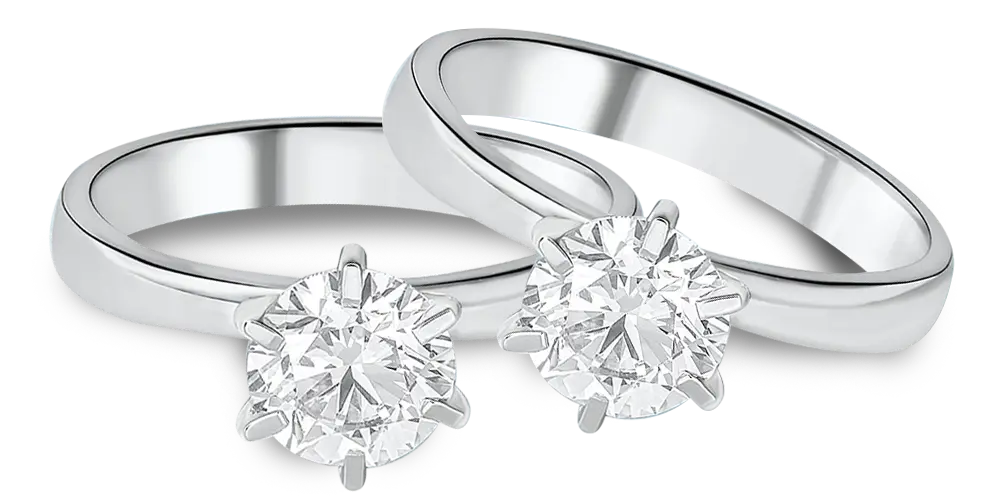
White gold is one of the most popular choices for wedding bands. It has the bright, modern look of platinum at a lower price, and it pairs beautifully with diamonds. But white gold has some quirks that are worth knowing before you buy, especially for a ring you'll wear every day.
This guide covers what white gold is, its pros and cons, how it compares to platinum, and how to care for a white gold wedding band so it looks great for years.
What Is White Gold?
White gold is real gold alloyed with white metals such as palladium, silver, or nickel. The result is a pale, slightly warm gray-white metal. To get the bright white finish people expect, most white gold jewelry is plated with rhodium, a bright white precious metal in the platinum family.
White gold comes in different karats:
- 10k - about 41.7% gold; hardest and most affordable
- 14k - about 58.3% gold; a popular balance of durability and value
- 18k - 75% gold; more gold content, slightly softer, warmer base tone
Pros of White Gold Wedding Bands
- Bright, modern look. Freshly plated white gold is crisp and white.
- Pairs well with diamonds. White metal emphasizes the brightness of colorless diamonds.
- Lower cost than platinum. Generally less expensive for a similar look.
- Lighter weight. Some people find white gold more comfortable than heavier platinum.
- Easy to size and repair. Gold is very workable at the bench.
- Durable. 14k white gold, in particular, holds up well to daily wear.
Cons of White Gold Wedding Bands
- Rhodium wears off. Plating wears with daily friction, revealing a warmer tone. Rings need replating periodically.
- Possible nickel sensitivity. Some white gold alloys contain nickel. People with nickel allergies should ask about nickel-free alloys or consider platinum.
- Scratches. Like any metal, white gold scratches with wear, though it can be polished.
White Gold vs. Platinum
| Factor | White gold | Platinum |
|---|---|---|
| Natural color | Warm gray-white (plated for bright white) | Naturally white |
| Plating | Needs periodic rhodium replating | No plating needed |
| Weight | Lighter | Heavier, denser |
| Cost | Generally lower | Generally higher |
| Wear | Scratches polish out | Develops a soft patina; metal displaces rather than wears away |
| Allergies | Some alloys contain nickel | Generally hypoallergenic |
| Sizing and repair | Easy | Requires specialized skill and equipment |
Both are excellent. White gold suits people who want a white look at lower cost and don't mind replating. Platinum suits people who want natural white with no plating.
Rhodium Replating: What to Expect
When your white gold band starts looking yellowish, especially on the palm side, it's time for replating. The process involves polishing out scratches, cleaning thoroughly, and electroplating a fresh layer of rhodium. Rings worn daily typically need it more often than pendants or earrings. Read more about rhodium plating.
Styles of White Gold Wedding Bands
- Plain polished bands - classic and easy to maintain
- Brushed or satin finish - hides fine scratches
- Diamond half eternity - sparkle across the top
- Full eternity - diamonds all around (hard to resize)
- Channel set - smooth and secure
- Milgrain and engraved - vintage-inspired details
- Contoured bands - shaped to fit an engagement ring
Men's White Gold Wedding Bands
White gold is popular in men's bands, often in wider widths with comfort fit, brushed finishes, or beveled edges. Because men's bands are often wider, they show rhodium wear sooner on high-contact surfaces. A brushed finish can make wear less noticeable.
Pairing White Gold With an Engagement Ring
If your engagement ring is white gold, a matching white gold band keeps the color consistent, as long as both are replated at the same time. If your engagement ring is platinum, a white gold band may look slightly different in tone after plating wears. Many people choose to match the metal exactly.
Sizing White Gold Bands
White gold sizes easily. After sizing, the ring is typically replated so the color is uniform. Full eternity bands and rings with full-circle engraving are harder to size.
Caring for a White Gold Wedding Band
- Remove before swimming in chlorine, using harsh cleaners, or heavy work.
- Clean with warm water and mild soap.
- Avoid abrasive polishes and toothpaste.
- Store separately to prevent scratches.
- Replate when the color starts to change.
- Have diamond bands checked periodically.
See our jewelry care tips for more.
White Gold Wedding Bands in Mesa
Brilliant Jewelry is a fourth-generation, family-owned private jeweler at 1237 S Val Vista Dr Ste 204, Mesa, AZ 85204. We'll help you choose a white gold or platinum band, size it properly, and keep it bright with in-house polishing and replating.
Book a free wedding band consultation or call or text (480) 331-8652.