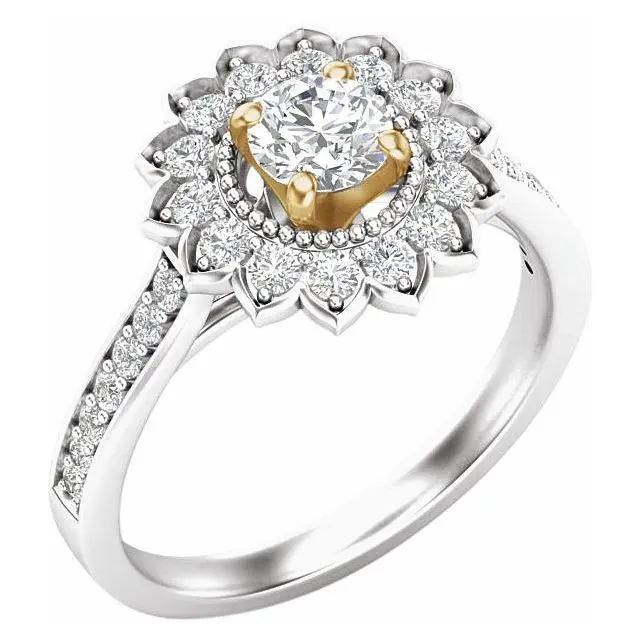
Lab grown diamond engagement rings have become one of the most talked-about choices for couples. They let you choose a larger or higher-quality diamond for the same budget, and they're real diamonds. But there are tradeoffs, and the decision deserves straight answers rather than hype in either direction.
This guide covers what a lab grown engagement ring really is, how to evaluate one, how it compares to natural, and how to choose the right setting.
What Is a Lab Grown Diamond?
A lab grown diamond is a diamond created in a controlled environment using either high pressure and high temperature (HPHT) or chemical vapor deposition (CVD). It has the same chemical composition, hardness, and optical properties as a natural diamond. It is not a simulant like cubic zirconia or moissanite.
Learn more about how diamonds are made.
Why Couples Choose Lab Grown Engagement Rings
- More diamond for the budget. Lab grown diamonds typically cost significantly less than natural diamonds of similar size and quality.
- Same sparkle and durability. A well-cut lab grown diamond looks and wears like a natural one.
- Budget flexibility. Savings on the stone can go toward a custom setting, wedding bands, or the wedding itself.
- Known origin. Some couples value knowing exactly where their stone was made.
The Tradeoffs to Consider
- Resale value. Lab grown diamonds generally have limited resale value. If you think of the diamond as something that holds value, natural may suit you better.
- Price changes. Lab grown diamond prices have tended to decline over time.
- Personal meaning. Some people place value on a stone that formed naturally over a very long time. That's a personal decision.
There's no wrong answer. It's about what matters to you.
How to Evaluate a Lab Grown Diamond
Cut
Cut quality matters most for sparkle. Because lab grown diamonds make larger sizes more affordable, it's tempting to prioritize size. Don't sacrifice cut.
Color
Lab grown diamonds are available in a wide range of color grades. Choose a grade that looks white to your eye in the metal you're using.
Clarity
Look for a stone that's eye-clean. Paying for higher clarity you can't see doesn't improve the look.
Carat
Lab grown makes bigger stones more accessible, but proportions on the hand still matter.
Grading report
Ask for a grading report from a recognized laboratory. Reports for lab grown diamonds identify them as laboratory grown.
Laser inscription
Many lab grown diamonds have a tiny inscription on the girdle identifying them as lab grown. Ask to see it under magnification.
Treatments
Some lab grown diamonds are treated after growth to improve color. A reputable jeweler should disclose this.
Best Settings for Lab Grown Engagement Rings
Any setting works with a lab grown diamond:
- Solitaire - lets a larger center stone shine.
- Hidden halo - a subtle side detail.
- Halo - maximizes sparkle and apparent size.
- Three-stone - lab grown makes larger side stones more affordable.
- Bezel - secure and modern.
- Pave band - adds sparkle along the band.
Popular Lab Grown Diamond Shapes
Round, oval, emerald, radiant, pear, cushion, and marquise are all widely available in lab grown. Elongated shapes like oval and pear look larger for their weight and flatter the finger.
Lab Grown vs. Natural: How to Decide
Ask yourselves:
- Is the biggest priority size and quality for the budget? Lab grown may be the answer.
- Is long-term value important? Natural may be the better fit.
- Does the origin story matter to either of you?
- How much do you want to allocate to the setting and wedding bands?
We'll show you both side by side at a consultation so you can see the difference in price and appearance for yourself. See our full comparison of lab grown vs. natural diamonds.
Caring for a Lab Grown Engagement Ring
Care is identical to natural diamonds:
- Clean with warm water, mild soap, and a soft brush.
- Remove it for heavy work, gardening, and chlorine.
- Have prongs checked periodically.
- Get a professional cleaning when it looks dull.
Insuring a Lab Grown Engagement Ring
Yes, you should insure it. An appraisal documents the stone, its lab grown origin, and replacement value for your insurer.
Custom Lab Grown Engagement Rings
Because lab grown stones free up budget, many couples choose a custom setting designed around their stone. You get a ring designed exactly the way you want with a diamond that fits your goals.
Lab Grown Engagement Rings in Mesa
Brilliant Jewelry is a fourth-generation, family-owned private jeweler at 1237 S Val Vista Dr Ste 204 in Mesa. We offer both lab grown and natural diamonds, explain the differences honestly, and design settings to fit your stone and style. Browse engagement rings or start a custom design.
Book a free lab grown engagement ring consultation or call or text (480) 331-8652.