A pearl necklace is one of the most classic pieces of jewelry, and one of the most often inherited. Pearls are also organic gems, which means they need different care than diamonds or gold. Treated well, a pearl necklace can be worn and passed down for generations.
This guide covers the main types of pearls, how to judge quality, popular necklace lengths, and how to care for and restring pearls so they last.
Types of Pearls
Akoya pearls
Akoya pearls are saltwater cultured pearls known for their round shape, bright luster, and classic white or cream color. They're the traditional choice for a strand of pearls.
Freshwater pearls
Freshwater pearls are cultured in lakes and rivers. They come in a wide range of shapes and natural colors, from white to pink to lavender, and are generally more affordable.
South Sea pearls
South Sea pearls are large saltwater pearls in white, silver, or golden tones, with a soft, satiny luster.
Tahitian pearls
Tahitian pearls are naturally dark, ranging from gray to black with green, blue, or purple overtones.
Natural pearls
Natural pearls form without human intervention. They're very rare. Most pearls on the market today, including high-end strands, are cultured.
Judging Pearl Quality
Pearls are evaluated on several factors:
- Luster - the sharpness and brightness of reflections on the surface. Luster is often considered the most important factor.
- Surface - how free the pearl is from blemishes, spots, or bumps.
- Shape - round is classic, but near-round, oval, baroque, and other shapes have their own appeal.
- Color - body color plus any overtone.
- Size - measured in millimeters.
- Matching - how well the pearls on a strand match each other.
- Nacre thickness - the layers that create luster. Thicker nacre is more durable.
Pearl Necklace Lengths
- Collar - sits snugly around the neck.
- Choker - sits at the base of the neck.
- Princess - just below the collarbone. The most popular, versatile length.
- Matinee - falls at the top of the bust.
- Opera - long enough to wear as a single long strand or doubled.
- Rope - very long, often wrapped or knotted.
Princess length works with most necklines and is a good first strand.
Wearing Pearls
Pearls are soft compared to most gems and sensitive to chemicals. A classic rule: pearls are the last thing on and the first thing off.
- Put pearls on after makeup, perfume, and hairspray.
- Take them off before exercise, swimming, or showering.
- Avoid letting pearls rub against rougher jewelry.
Wearing pearls regularly is actually good for them, as long as you wipe them after wearing.
Cleaning Pearls
- After wearing, wipe pearls gently with a soft, slightly damp cloth to remove skin oils and residue.
- Let them dry flat before storing. Hanging wet pearls stretches the silk thread.
- Never use ultrasonic cleaners, steam, or harsh chemicals on pearls.
- Avoid jewelry dips meant for gold or diamonds.
For more, see our jewelry care tips.
Storing Pearls
- Store flat in a soft pouch or lined box, separate from other jewelry.
- Avoid airtight plastic bags for long-term storage. Pearls benefit from a little air.
- Don't hang pearl strands for storage, since it stretches the thread.
- Keep away from heat and direct sunlight.
Why Pearls Need Restringing
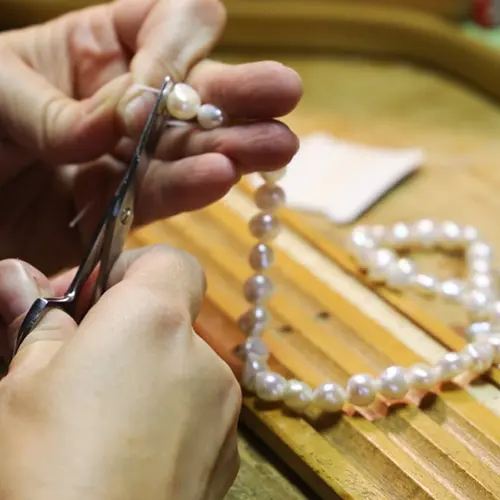
Pearl necklaces are traditionally strung on silk thread with a small knot between each pearl. The knots keep pearls from rubbing against each other and keep the strand from scattering if it breaks.
Silk is beautiful but stretches and weakens with wear, moisture, and body oils. Signs your pearl necklace needs restringing:
- Visible gaps between pearls and knots
- The thread looks gray, dirty, or frayed
- The strand feels stretched or droops more than it used to
- The clasp area is worn
Strands worn often need restringing more frequently than strands worn occasionally. Learn more about pearl and bead restringing.
Pearl Necklace Repairs
Besides restringing, common pearl necklace repairs include:
- Clasp replacement - upgrading a worn clasp to a more secure style
- Adding or removing pearls - to change length
- Converting a strand - into a bracelet, earrings, or a layered piece
- Replacing damaged pearls - with a close match where possible
Inherited Pearls
Many people inherit pearl necklaces they aren't sure how to wear. Options include restringing and wearing as is, shortening to a modern length, adding a new clasp, or redesigning the pearls into custom jewelry. An appraisal can document the value for insurance or estate purposes.
Are My Pearls Real?
A simple test some people use is gently rubbing a pearl against your front teeth. Real pearls often feel slightly gritty, while many imitation pearls feel smooth. This is not definitive. A jeweler can evaluate your pearls more reliably.
Pearl Necklace Care in Mesa
Brilliant Jewelry is a fourth-generation, family-owned jeweler at 1237 S Val Vista Dr Ste 204 in Mesa. We restring, repair, appraise, and redesign pearl necklaces, and we'll help you keep your pearls ready to wear and pass down.
Book a pearl necklace consultation or call or text (480) 331-8652.